

Yeah, it’s definitely more for a specific groups of people, such as those who play old untranslated emulated titles and such.


Yeah, it’s definitely more for a specific groups of people, such as those who play old untranslated emulated titles and such.


People are looking at the price of the steam decks and non-pro versions of consoles.


The m.2 SSD is easily accessible, it comes with a 2230 m.2 (same size as the Steam Deck), but has room to install a full size 2280 m.2. It only has room for 1 though, so while you can upgrade to a larger size you can’t add a second. Swapping out the m.2 will require cloning your drive or reinstalling SteamOS to the new drive.
There’s also a high speed microSD slot for even easier space upgrades, and microSDs with games can be swapped directly between the Deck and Machine.
For RAM, it uses laptop DDR5. It is user upgradable, but isn’t as easy to access as the m.2 drive is.


They were supposedly able to take a loss on the original Steam Decks, at least the lower priced 64GB models. There’s also an argument to be made that this device is primarily competing with consoles, where Steam doesn’t have a monopoly. Steam also allows games from other stores to be run on their unlocked device, it’s not their fault that Epic decided not to make an offical linux launcher.
But I’m not a lawyer, and I’m sure Epic will try to start anti-trust investigations over anything they can.


Valve just announced they’re still targeting a release in the first half of 2026, but they don’t know when and it’s uncertain due to component pricing.
There’s a dedicated post about it in this community that went up a couple hours ago.


Usually when you think of something being anti-competitive, it’s because it’s bad for consumers. But you can also be anti-competitive by doing things that are appealing to consumers in the short term (like selling a product at a loss) but help ensure market domination for the longer term.
Valve’s position here is tricky, the steam machine would have a small marketshare compared to consoles, but as a PC it could be considered furthering Valve’s PC game “monopoly”.


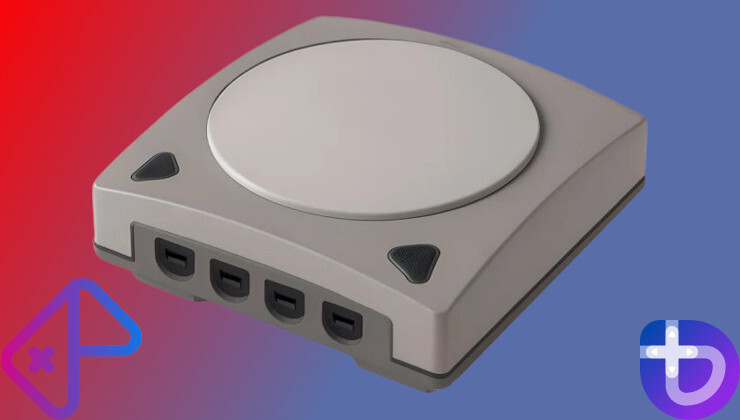
I’m pretty sure they’re going to wait to release the controller alongside the Steam Machine.
Unfortunately that would mean that if RAM/etc prices cause a Machine delay, we’ll probably see the controller get delayed as well.


That button combo is supposed to reset UEFI settings, and possibly APU/Power Logic. I’ve heard of valve support recommending it before, and it’s reference on the Steam Deck Arch Wiki page.


I played it around when it hit 1.0, and didn’t have any performance issues.


The author/owner for the article/site is from the UK, so it shouldn’t be a translation issue.


What do you mean?


With Exp 33, you will definitely want to play with the settings. You can get it looking decent, but the default settings were not ideal back when I played it.


Spiderman ran pretty great, except for some cutscenes and inside the FEAST building. Ultimately I just tolerated those spots, since nothing I changed seemed to help.


I just finished playing Spiderman Remastered and Oblivion Remastered.
Been playing Cloudheim with a friend, and it’s alright. Feels heavily inspired by Genshin, at least at a surface layer. Has a huge amount of stuff to do though.
Also getting started on Kingdom Come Deliverance 1. I’ve always heard how good it is, and a coworker has been pushing me to play it.
I’ve also been messing around with Monster Hunter Wilds on the deck. I had to buy a new graphics card for my desktop PC awhile back, because it got destroyed by lightning. MH Wilds was included for free with the card, so I’ve had it all this time but haven’t even tried to play it due to the performance issues. But the recent performance updates have made it possible to play on Deck. Performance varies wildly, most of the smaller areas run good enough, but the flat plains area has a pretty consistently low fps. It’s definitely not ideal, but it is possible to play it on Deck now without the “little engine that could” mod.


Much slower transfer speed, requires software installed on both devices, and is lacking many other features that CopyParty provides.


Also this is my 500th post I’ve made on Lemmy, with most of them being in this community. Not really important or anything, but I’ve really enjoyed my time here talking with all of you.


Ext4 will be the easiest probably. The deck supports BTRFS, but requires manual remounting after every steamOS update for some reason.
If you do want to use BTRFS, I’d look into Popsulfr’s deck BTRFS project. I know it can auto configure microSD cards for BTRFS (and fix the previously mentioned mounting issue), as well as set up some of the other BTRFS benefits like automatic compression and deduplication. Deduplication especially can save you a lot of space.
BTRFS compression can also speed up load times when loading games from slower storage like a microSD, which is a nice benefit to go alongside the increased storage space.


Ssh and ftp are great once they’re setup, but they’re not as simple as this, especially for non technical users.
This is also much faster than ssh/ftp for downloads and uploads. It breaks files up into multiple concurrent streams, in benchmarks it can hit download speeds of 8GB/s and upload speeds of 1GB/s (network allowing). It also does deduplication during the transfers, making real world transfer times faster than just the actual transfer speed.


By default the deck functions as keyboard and mouse while in desktop mode.
I believe if you hold the menu button (3 line button) for a couple seconds it’s supposed to swap between desktop controls and being a controller.
If that doesn’t work, you could possibly try launching Lutris through steam big picture (in desktop mode) or game mode, which will let you access different steam controller configs.
I’ve also run into games on steam that specifically failed to identify my language on Linux. I can generally tell what options I need to pick to change a language back to English, but some langauges like Chinese and Korean are difficult to to navigate.